








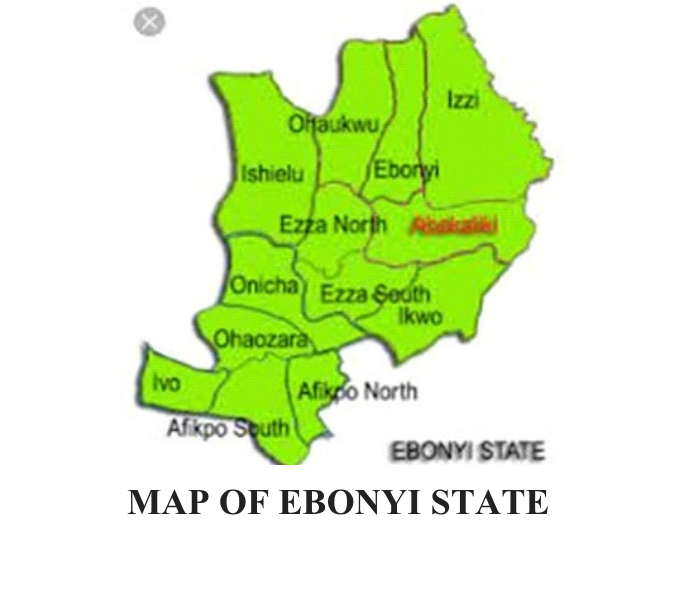
Ebonyi State was created on 1st October 1996 with the capital in Abakaliki. The state was created by the then federal military government under the leadership of late Gen. Sani Abacha from the old Abakaliki Division of Enugu State and the old Afikpo Division of Abia State.

Geographically the state, in the southeastern part of Nigeria, lies approximately within latitudes 5/40′ and 6/45’N, and longitudes 7/30′ and 8/28’E. The state has a land area of about 5,935 square kilometers and its people are Igbo. According to the 2016 National Population Census, Ebonyi State has about 2.9 million inhabitants, ranking 34th out of the 36 states of the nation. The motto of the State is “Salt of the Nation.
” It shares boundaries with Enugu State to the west, Benue State to the north, Cross River State to the east and Abia State to the south. Abakaliki, the state capital, is the largest city in the state. Other prominent towns include Afikpo, Edda, Onueke, Nkalagu, Uburu, Onicha, Ishiagu, Amasiri and Okposi. For administrative purposes, Ebonyi State is divided into three Senatorial Zones, each represented by a senator at the National Assembly, and six Federal Constituencies, each represented by a Member of the House of Representatives also at the National Assembly.

The three Senatorial Zones are: Ebonyi North – comprising Abakaliki, Ebonyi, Ishielu, Ohaukwu and lzzi LGAs Ebonyi Central – comprising Ikwo, Ezza North and Ezza South LGAs Ebonyi South – comprising Afikpo North, Afikpo South, lvo, Ohaozara and Onicha LGAs. The state is also divided into thirteen local government areas (LGAs), namely: (1) Abakaliki, (2) Afikpo North, (3) Afikpo South, (4) Ebonyi, (5) Ezza North, (6) Ezza South, (7) Ikwo, (8) Ishielu, (9) Ivo, (10) Izzi, (11) Ohaozara, (12) Ohaukwu and (13) Onicha.
Economically, Ebonyi State is based on agriculture, mainly yam, rice, oil palm, and cassava crops. A key minor industry is mining due to lead, zinc, and limestone deposits around Abakaliki, and locally hand-made baskets of various sizes at Ntezi.
The Devastating Impact of Water
Scarcity in Ebonyi State in the Early 1990s
The creation of Ebonyi State in 1996 marked a significant milestone in Nigeria’s political history. However, this new state faced a formidable challenge shortly after its establishment – the dire issue of water scarcity. The ensuing consequences, including the outbreak of diseases such as guinea worm, posed severe threats to the well-being of the populace, resulting in profound economic losses and tragic loss of lives, particularly among children and pregnant women.
One of the immediate and devastating repercussions of water scarcity in Ebonyi State was the outbreak of waterborne diseases. The health implications of the water crisis were profound, with an upsurge in cases of guinea worm and other waterborne diseases. Guinea worm, caused by the parasitic larvae Dracunculusmedinensis, resulted in excruciating pain and debilitating symptoms, incapacitating a significant portion of the population. A total of 2,691 cases of guinea worm outbreak were reported in Ebonyi State in 1998 according to a scientific report.
 Beyond the toll on public health, the water scarcity crisis in Ebonyi State had severe economic ramifications. The prevalence of waterborne diseases led to increased healthcare expenditures, both for individuals and the government. Productivity declined as a consequence of widespread illness, with the workforce experiencing absenteeism and reduced efficiency. The economic losses incurred were not only immediate but also had long-term implications for the state’s development. The educational sector was not spared as children trek mills in search of water leading to absenteeism or late attendance to school. Women are often exposed to rape as they travel to mills in odd hours in search of clean water.
Rev. Fr. Dr. Peter Omogo havingwitnessed the hardship caused by water scarcity made the provision of accessible clean water to communities and villages in Ebonyi State a top priority.
Ten solid years into the establishment of the Samuel Omogo Foundation (SOF) an impact assessment was conducted to evaluate the impact of SOF in solving the major problem of water scarcity as it cut across all sectors. During the assessment the following; The following were undertaken: (i). Obtaining the list of selected communities where boreholes were drilled from the Samuel Omogo Foundation, (ii). Contacting the proposed well managers, (iii). Visitation of the different site, (iv). Obtaining pictures of sources of water and pictures of the commissioning of the boreholes drilled in target communities, (v) Interviewing the well managers and other community members, (vi). Presentation of the findings.
Summary of key findings;
The summary of key findings are as follows:
1. Water scarcity is clearly a very serious problem in all the communities listed.
2. The communities all have sizable populations with an average household comprising up to 10 persons.
3. The main sources of water supply are ponds, rivers, and streams and these are about 1hr to as much as three hours of walking distance away from the villages.
4. Majority of the water sources are being contaminated by sewage (faeces and urine), animal dung, refuse, and plant debris and leaves. The possibility of chemical contaminants cannot be ruled out as some people wash clothes and other items capable of polluting the water sources right inside the water.
5. The major risks reported include snake bites, attack by hoodlums and thieves, rape of women and girls, molestation by wild animals including monkeys, children going to school late and with dirty uniforms, and fighting at the water source.
6. The majority of the members of the communities access the water sources on foot. 7. The water obtained from all the sources was described as unacceptable.
8. The women and the children are mainly responsible for fetching of the water in all the communities.
9. All the water sources dry up towards the beginning of the dry season especially around November-April each year.
10. The major water-borne diseases suffered by the people as a result of water scarcity include: Typhoid, Cholera, and dysentery. Before the provision of the boreholes, the prevalence of these diseases was very high and there were regular outbreaks of these diseases in the target communities.
11. All the community members and well managers interviewed acknowledged that the boreholes have greatly alleviated the suffering of their people, reduced exposure to disease-causing water-borne infectious agents, and enhanced personal hygiene.
12. All the managers noted that adequate arrangements have been made to manage and maintain the boreholes since they were drilled. Some of the maintenance activities initiated by the managers and the communities included: constituting a borehole management committee, and providing security to monitor and regulate the usage of the boreholes.
13. The commissioning of the boreholes was successful and beneficiaries express gratitude to the philanthropists who provided the boreholes to them through the Samuel Omogo Foundation.
Key Impacts of SOF on Beneficiary Communities
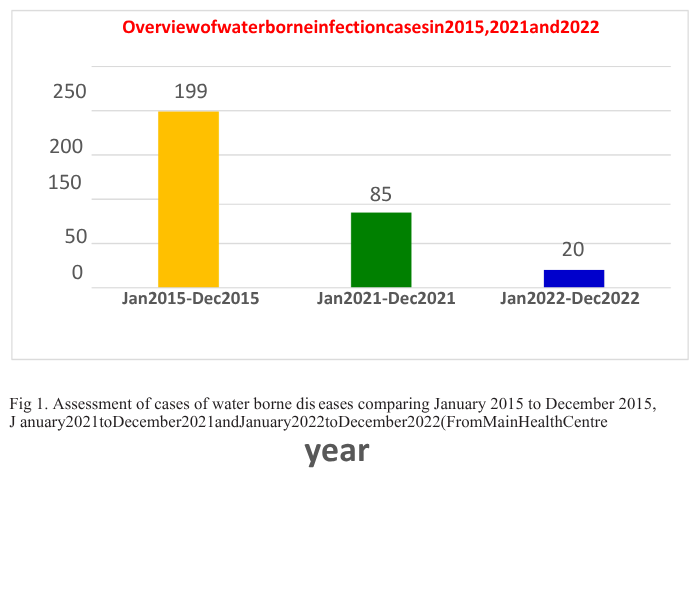
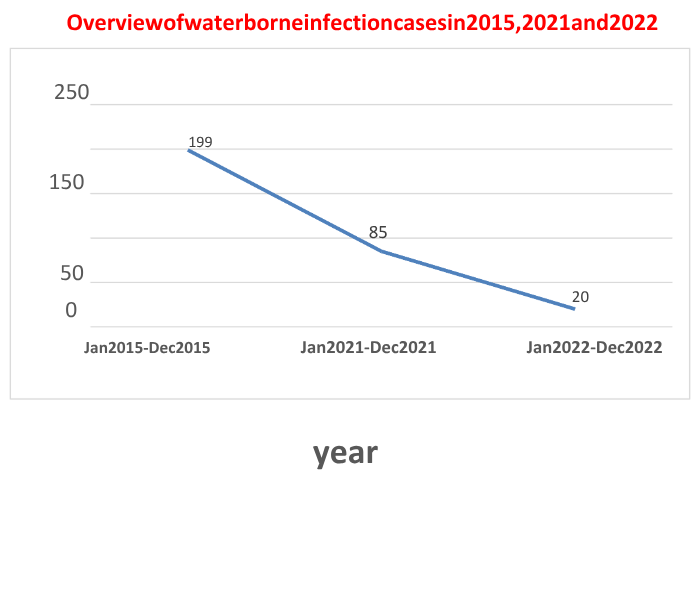
Information obtained on cases reported at two major health facilities in the area (Ngbo Court Health Centre and MDG Health Centre) in Ohaukwu LGA diagnosed as water borne disease presenting as typhoid or cholera with symptoms of diarrhea, dysentery, and vomiting. i.e., a comprehensive assessment from January 2022 to December 2022, showed 89.9% reduction in cases of water borne diseases reported in the communities from January 2015 to December 2015 when SOF commenced intervention with the provision of water.
| Yea r January 2015 to December 2015 January 2021 to December 2021 January 2022 to December 2022 | Cases of water-borne diseases 199 85 20 |
Other impacts as indicated by the community members are as follows:
| S/No | Health and developmental problems as a result of water scarcity | % Reported cases before drilling of boreholes | % Reported cases after drilling of boreholes 0% |
|---|---|---|---|
| 1. | Child molestation and rape at sources of waters supply (ponds, streams, rivers) | More than 50% | 0% |
| 2. | Children going to school late due to water-seeking | More than 60% | Less than 1% |
| 3. | Child accidents, injuries due to water-seeking | More than 50% | 0% |
| 4. | Children going to school with dirty clothes/uniform | M ore than 80% | 0% |
| 5. | Fighting & quarreling and cases of violence at water sources | More than 70% | 0% |
| 6. | Lateness to work and church due to water scarcity | More than 60% | 0% |
| 7. | Cases of snake bites and attacks by wild animals | More than 40% | 0% |
| 8. | Frequency of hospital/health result of water borne diseases | More than 75% | Less than 2% |
Summary of comments on the impact of the boreholes as indicated by the community members:
1. Reduction of time wasted to source for water
2. Reduction of the stress of trekking long distances to a source of water
3. Reduction of child molestation due to water scarcity
4. Reduction of water borne diseases and illnesses associated with lack of personal hygiene caused by water scarcity
5. Helped those who do business with water 6. Helped in domestic uses
7. School children no longer suffer from going far to fetch water & and children now attend school on time
8. Reduction of blisters and risks children undergo walking long distances to fetch water including accidents & kidnapping
9. Bathing was hardly done once a day but now up to thrice daily
10. Availability of water reduced high levels of dirty clothes
11. The availability of good drinking water has improved the health of people
12. Alleviation of suffering going long distances to fetch water, especially among older women.
13. Availability of water for house construction
14. No more violence (eg fighting and quarrelling) usually experienced at water source
15. No more risk of snake bites and attack of wild animals experienced at the sources of water supply (eg, ponds & streams)