
The presence of Irish priests in Eastern Nigeria is rooted in the history of Catholic missionary activities in the region during the late 19th and early 20th centuries. Irish missionaries, including priests and nuns, arrived in Nigeria as part of the broader Catholic missionary movement. Irish missionary orders, such as the Missionary Society of St. Patrick (Kiltegan Fathers) and the Holy Rosary Sisters, were among those involved in the Nigerian mission.
The Irish priests, along with other missionaries, played a crucial role in establishing schools, hospitals, and churches in Eastern Nigeria. They focused on evangelization, education, and healthcare services. The missionaries often worked closely with local communities, adapting to the cultural contexts of the people they served.
In 1973, what is today known as Abakaliki Diocese was carved out of Ogoja Diocese, and in September of the same year, Bishop Thomas McGettrick, a veteran missionary of St. Patrick\’s Society who had served as Bishop of Ogoja since 1955, was installed as its first Bishop. The only junior seminary in the Diocese, St. Augustine\’s Seminary, Ezzamgbo, was founded in 1958 with about half a dozen students. The Irish priests played a vital role in establishing and running the school.
Challenges and Achievements:
The missionaries faced various challenges, including cultural differences, language barriers, and the harsh tropical environment. However, their dedication and perseverance led to the establishment of a strong Catholic presence in Eastern Nigeria. The Irish missionaries contributed significantly to the development of education and healthcare in the region. They established schools that provided formal education and promoted literacy. Additionally, hospitals and clinics run by these missionaries played a crucial role in delivering healthcare services to the local population.
“In the gentle whispers of Irish priests, seeds of faith are sown, and in the hearts they touch, vocations bloom like sacred flowers – a testament to the enduring power of influence.”
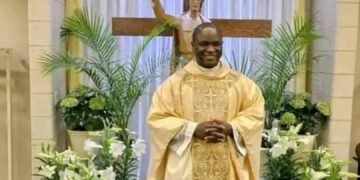
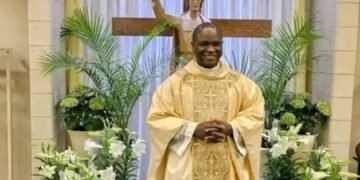
Rev. Fr. Dr. Peter Okwoeze Omogo’s journey to priesthood was not only a personal calling but a reflection of the profound impact that Irish priests like Fr. P. J. Melican, Rev. Fr. Kitterick etc. had in his community. In every sermon, gesture of kindness, and shared moment, the legacy of these priests echoed, shaping the spiritual destinies of those they touched.
In his reflection of his experience with the Irish Priest, Fr. Peter shared this with us:
“The St. Patrick’s Missionary Society (SPMS) brought the good news to my people. They worked in the churches and opened schools in the southeastern region of Nigeria. They brought Christianity to my people who were already worshiping God in their own way before the coming of the missionaries. They baptized me; they were my pastors and teachers in middle and high schools. These Irish priests built bridges; they brought the light to my people. They made me what I am today
I prayed that the good Lord would help me to be a priest. The Irish priests inspired me by the things they said but also by the work they did. They would go back to Ireland for a vacation. Every time they left; they had a project in mind. They would go home and come back and help my people. I still remember Fr. Kitterick in his seventies working in my place, he baptized and gave me my First Communion. In Emmanuel Church it was always difficult for people to cross the bridge two miles before the church, (Itumah Bridge) because it was made of wood and after some years it started ripping off and always scared the people due to its poor condition. Several times people used to carry extra planks for support on the wooden bridge to place on the ones slipping off to avoid people falling into the river. Fr. Kitterick went home and raised funds and built that bridge. People no longer fear walking or riding vehicles or motorcycles across the bridge. Fr. Kitterick also built another bridge at Ukwagba where people had avoided for a long time because of the poor wooden bridge. Now people pass there freely, and the bridge was named after him: “Fr. Kitterick’s Bridge.”
The Irish priests raised money in their home country to aid my community. They built buildings, schools, bridges, hospitals, and churches. Their work in my country made me think about being a force for good. I thought about how I could make a difference in the lives of others, just as the Irish priests did. This has been my driving force in the priesthood to make a difference in the lives of others. Stephen Grellet, a Quaker Missionary, said ‘I expect to pass through this world but once; any good thing therefore that I can do, or any kindness that I can show to any fellow creature, let me do it now; let me not defer or neglect it, for I shall not pass this way again.’ I encourage people if there is any good, any kindness, any love, any generosity you wish to share, you better share it now. Never postpone it for you might never have the chance to do it again.” The opportunity to do good does not come at the convenient time. My education is meaningless if I cannot use it to assist my fellow human beings. And so each day I strive to make a difference in my little ways in the lives of others just like my Irish priests.”
Growing up as little kid we had a big shop at Okwo market Ngbo. Our shop was second to the biggest shop then at Okwo market. My brother had a standing rule that whenever the Irish priest came to our shop that he should not pay for whatever picked in the shop. They loved my family and we loved all of them. My parish priest after my elementary school was Fr. P. J. Melican who was assigned newly to my parish after serving as the vice rector of our junior seminary. He was elated when I mentioned to him that I was preparing to go to the seminary, and he drove me to the junior seminary for the entrance exams. I am sure he said something to Fr. Dowling, my rector, as he took some liking for me over the years in the seminary.
Fr. Dowling our dear rector in the junior seminary was a man of many hats. He had the best plan in the world for the success of his students- he was our principal, athletic/sports director, the bursar, procurator, our spiritual director, and motivational speaker every morning at the assembly, simply put he was all things to us. Almost every Sunday I followed Fr. Dowling to the outstations masses and coming back he would buy for each of us a loave of bread. In the evenings, Father Dowling would play golf; a few of us would be picking the balls for him. The constant morning training that Fr. Dowling gave to us made us not only to be competent in our areas of sports specialization but ready for any competition at any time. He prepared us so well that secondary schools sports/athletic competitions on the local government and state levels were always easy for us to win. We are so proud of our rector. He even brought some of the Irish seminarians Patrick Murphy and Karian Flynne for their internship in our seminary. All those that studied under Fr. Dowling today are doing so well in different parts of the world, in our country and dear state.
During the last days of Father Kitterick, he invited all the senior seminarians to his parish for his last mass. We were about 5 senior seminarians and other junior seminarians. During his homily he said, “I can now die in peace for I have seen those that will continue from where I would stop”. The last mass was really moving, and it reminded me when Paul said to the Christians ‘you will never see me again”. Kitterick died few days after that last mass.
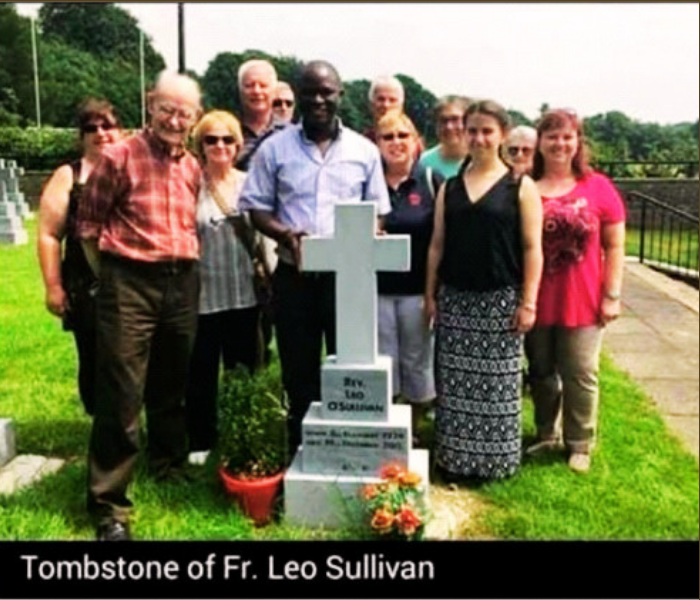
Father Leo Sullivan was my last Parish priest. We became friends when he was subbing for Fr. P. J Melican who was on medical leave. Father Sullivan took good care of me while I was in the senior seminary and when he was going back to Ireland, he asked Fr. Kevin O’Hara to take good care of me which he did until I was ordained a priest on July 10, 2004.
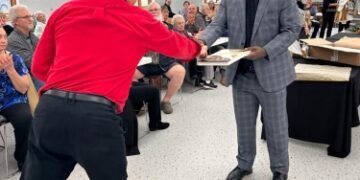
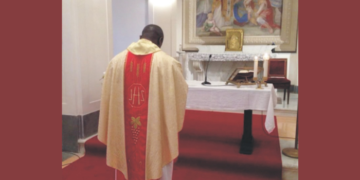
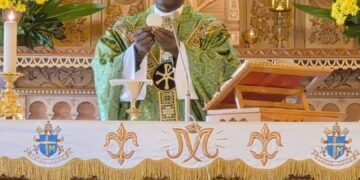
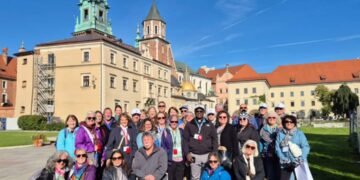
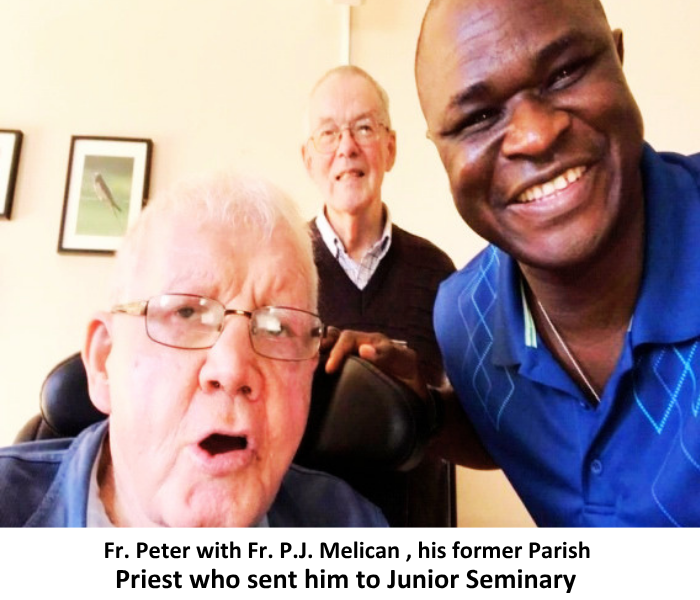
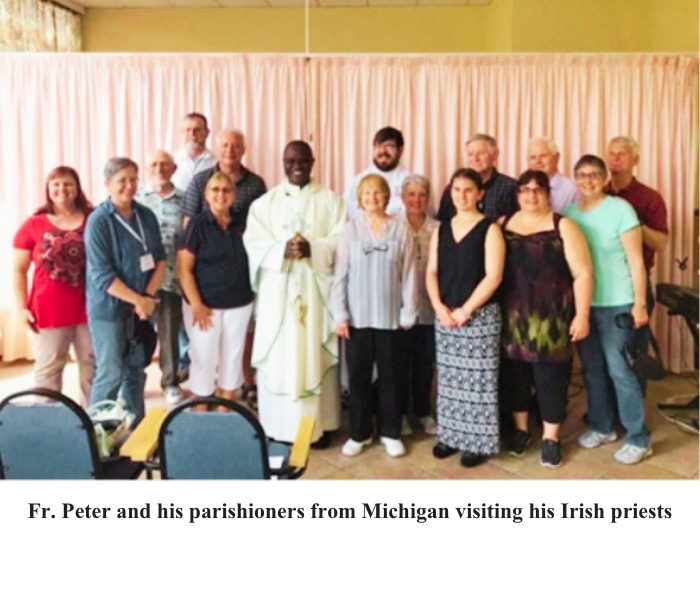
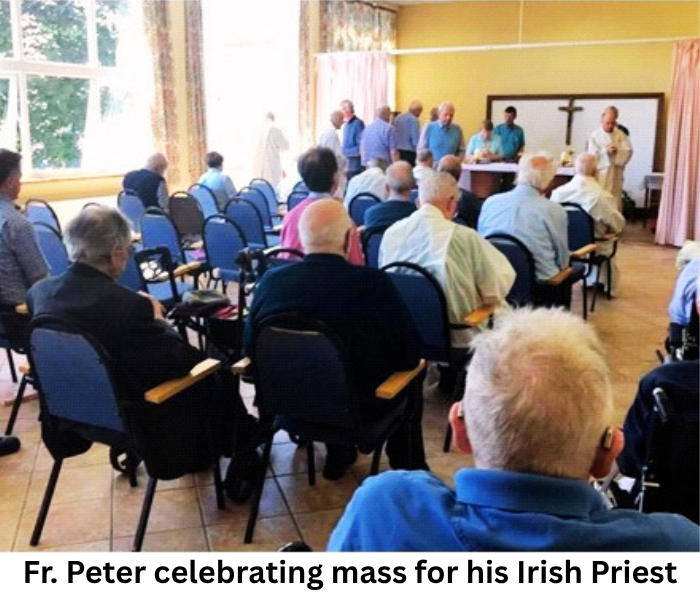
In appreciation for all that the St. Patrick’s Missionary Society did for me, our diocese, and the state, I visited their center in Kiltegan, Wicklow with 18 parishioners from St. James Catholic Church Montague, Michigan, USA. I celebrated mass for them for two days. It was nice to visit and mingle with those that groomed me. My former parish priest
Fr. P. J. Melican who drove me to the junior seminary for my entrance exams was so happy to see me now a priest. The priests shared with me their different experiences in their different parishes while in Abakaliki or Ogoja diocese. At the last mass I celebrated for them, during my appreciation speech I said, “In your downtime when you see people like us you realize you have not wasted your time in Nigeria”. The Irish priests played a major role in the growth and success of churches in our diocese. I like one of the sayings of the Irish priests “If you cannot give by going, go by giving”; meaning if you cannot give your life in serving God, then support those who have given their lives to serve God and humanity. The Irish priests that evangelized in my diocese left lasting legacies of love, kindness, and sacrifice in my heart; that was why I made up my mind to be a priest and I made a commitment to myself that I WILL LIVE TO GIVE.
Roots of Faith: Father Peter’s Journey from Nigeria to the USA to Ireland Homage:
“Kindness is a boomerang that always finds its way back to the hand that threw it.” – Anonymous
Rev. Fr. Dr. Peter Okwoeze Omogo’s journey to priesthood bore the fingerprints of inspiration left by Irish priests who selflessly served in his Nigerian parish. These dedicated individuals, having spent their entire lives in Nigeria, imparted not only religious teachings but also a profound sense of duty and commitment to their calling. When he became a priest, Fr. Peter always looked forward to returning the kind gesture he received from the Irish Priest. When he finished his studies in the USA, he felt a deep yearning to express his gratitude to the Irish priests who had played a significant role in shaping his spiritual path. Despite the geographical distance and the passage of time, Father Peter’s connection to these mentors remained strong.
Despite his demanding schedule as a pastor overseeing three parishes in the USA, Rev. Fr. Peter made a heartfelt decision to honor the Irish priests who had profoundly influenced his life. Some of these revered individuals had already passed away and were laid to rest in their homeland, Ireland. Undeterred by the distance, he together with some of his parishioners embarked on a pilgrimage to Ireland, paying respects at the graves of these venerable priests who had dedicated their lives to the service of God in a foreign land.
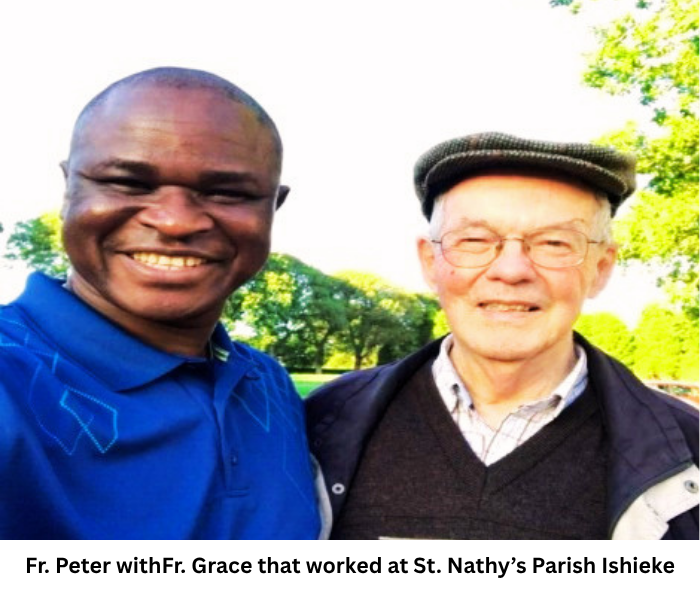
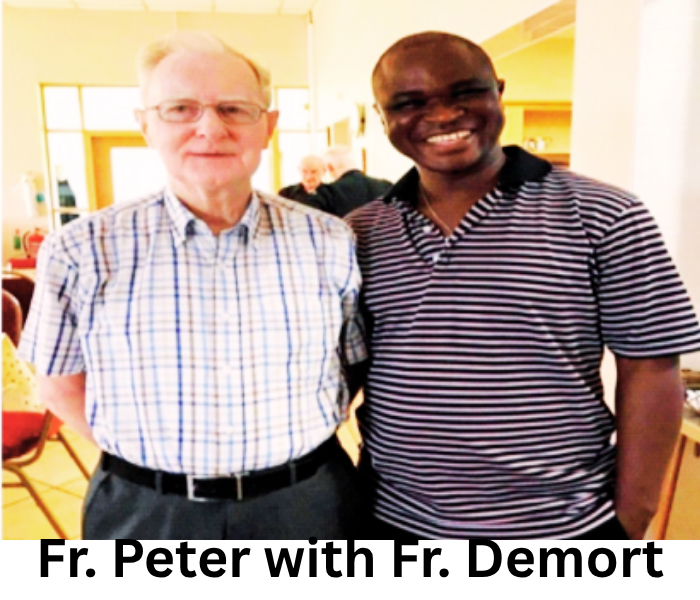
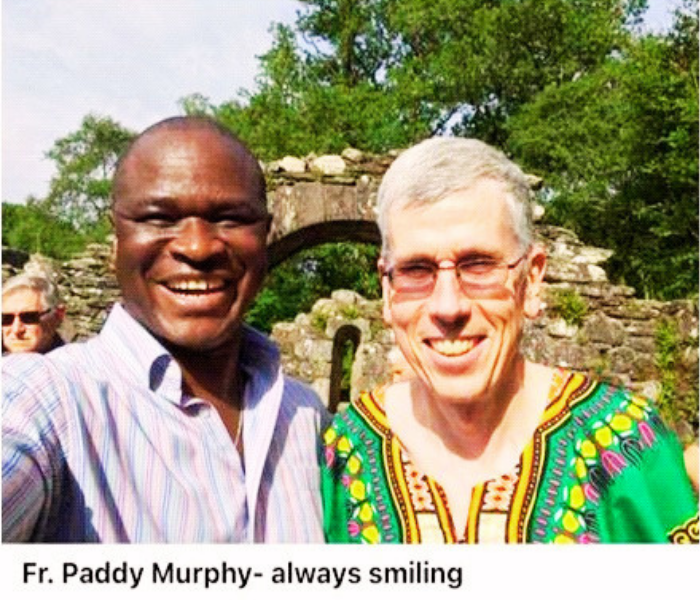
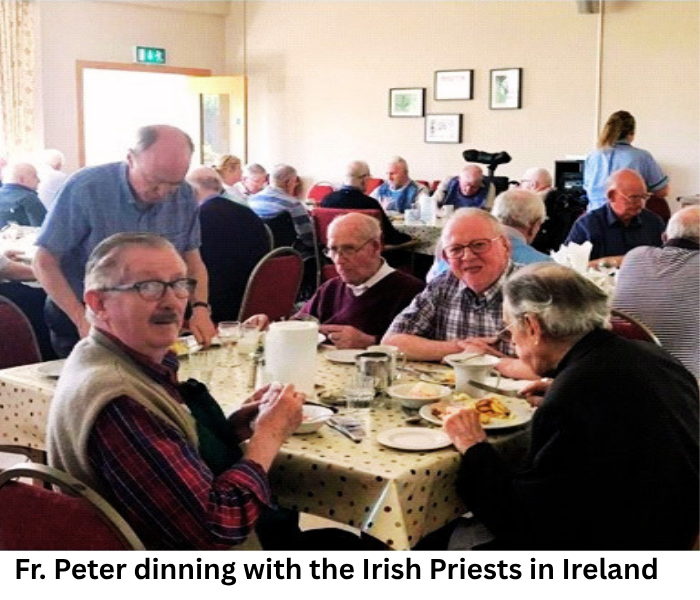
The living Irish priests, upon seeing Fr. Peter with his parishioners, were filled with joy and gratitude. They felt a deep fulfillment, witnessing how the seeds they had planted in Nigeria not only took root but also flourished abundantly, in accordance with the teachings of the Word of God. Among the host of the Irish priests visited were Reverend
Fathers Paddy Murphy, P.J. Melican, Dermot Connolly, Tom, Sean Cullen, and Grace, who had served at St. Nathy’s Ishieke, along with Rev. Sr. Toomey who served at Mater Misericordiae, where Father Peter had engaged in his internship after his philosophical studies. The reunion and homage paid by him became a touching testament to the enduring bonds forged through shared faith and service to God.
Standing at their resting places, he wept as reflected on the impact these Irish priests had on his vocation. Their unwavering commitment, sacrificial service, and deep spirituality had been a guiding light for him, shaping his journey toward priesthood. In that quiet cemetery in Ireland, Fr. Peter felt a profound sense of gratitude and connection as if he was standing on the shoulders of giants who had paved the way for his spiritual calling.
His homage to the Irish priests became a poignant reminder of the interconnectedness of faith and the enduring legacy of those who dedicate their lives to serving others. It was a testament to the idea that inspiration, once sown, has the power to transcend borders and generations. In honoring the memory of these Irish priests, He not only paid his respects but also celebrated the unbroken chain of faith that linked his Nigerian parish to the distant shores of Ireland.
Gallery of Fr. Peter’s Visit to Ireland to See Some of the Irish Priests that Served in Nigeria